- WARNING -
The site you are about to enter
contains only adults topics !
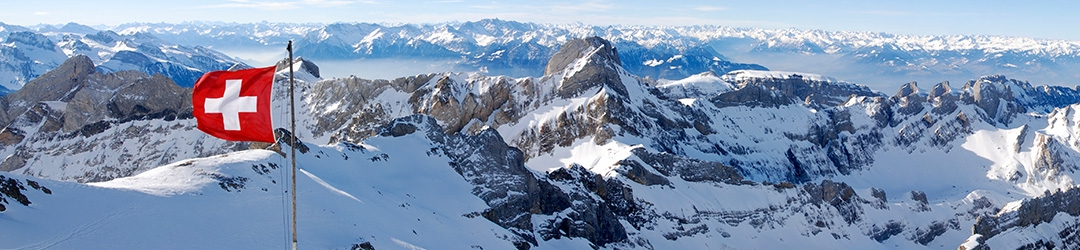
With the new federal constitution
the legal basis has changed for absinthe, which was a
popular spirits in former times. The so-called absinthe
prohibition is no longer anchored in
constitutional law. However, there are no basic changes
for the time being because the prohibition on production,
importation, transportation and sale of absinthe is still
stipulated in the food legislation.
In spite
of the prohibition the illegal production of the "Green
Fairy" has never completely ceased in Switzerland.
Then, particularly in the 1960s and 1980s, the
authorities prosecuted violations of the absinthe ban
more strictly. The cantonal and customs authorities are
responsible for prosecution. The alcohol law and the
Swiss Alcohol Board overlap concerning the surveillance
of distilling equipment and the use of alcohol, which is
suitable for the production of absinthe.
Absinthe
prohibition goes back to a public referendum which was
launched in 1906 with 168,000 signatures. Four years
later it came into force. The trigger for this poll were
several shocking crimes, for example, a murder in the
Canton of Vaud where an intoxicated husband shot and
killed his wife and two daughters. This incident and
other crimes were blamed on the abuse of absinthe.
First, the
absinthe ban was enforced in the Cantons of Vaud and
Geneva (1906 and 1907) and then on a national level. The
measure is due to health policy but there are also a lot
of emotional reasons going back to particular historical
circumstances in that era.
The wormwood
contains several gasolines of plants which can appear
toxic with high amounts, in particular the thujone, which
comes from the plant wormwood, this is a toxic substance
with high amount because it is epileptic.
On the
other hand with low dose, thujone acts like a stimulant
for the motor activities and mental and it has a small
percentage of accumulation of the product inside the body
(by the way of comparison, cafeine, which is stimulative
for a certain type of motor activity, has same toxicity
as thujone).
We find
also anethol, which comes from the gasoline of the anise
which tends to be opposed to the convulsions due to
thujone: theoretically, the convulsante activity of
thujone would be decreased by the anethole, unless
alcohol does not amplify the properties of thujone.
One finds
also anethole, which comes from the gasoline of the anise
which tends to be opposed to the convulsions due to
thujone: theoretically, the convulsante activity of
thujone would be decreased by the anethole, unless
alcohol does not amplify the properties of thujone.
In
conclusion, for a reasonable drinker, low dose liquor of
wormwood contained in glass of wormwood (if one suppoose
that the wormwood is consumed with water...) would be
more stimulative than dangerous.
But
in Switzerland, according to the law, it is not interdict
to have at home and to consume wormwood the Article 32ter specifies
that they are manufacture, the importation, transport,
the sale, detention for the sale are prohibited.
Let us
note that in Czech Republic, Spain and in Andorre, the
wormwood is still manufactured and it is possible to
drink and to buy some.
La
base légale concernant labsinthe a changé avec ladoption
de la nouvelle constitution fédérale qui ne contient
plus de disposition concernant linterdiction de ce
breuvage autrefois apprécié. Mais rien ne change sur le
plan matériel: linterdiction de fabriquer, dimporter,
de transporter ou de vendre de labsinthe figure
dans la législation sur les denrées alimentaires.
En dépit
des interdictions, la fabrication clandestine de la
« Fée verte » na pratiquement jamais
été complètement abandonnée. Dans les années 60 et
80, les autorités avaient procédé à des actions denvergure
contre les infractions à linterdiction de produire
de labsinthe. Ce domaine est de la compétence des
autorités cantonales et de la douane aux frontières. La
législation sur lalcool ne touche pas directement
labsinthe : la Régie des alcools surveille
simplement les appareils de distillation et lalcool
qui pourraient servir à fabriquer de labsinthe.
Linterdiction
de labsinthe remonte à une initiative populaire déposée
en 1906 avec 168 000 signatures. Elle est devenue
effective quatre ans plus tard. Des crimes retentissants
ont été à lorigine de cette interdiction
constitutionnelle, en particulier le crime de Commugny
dans le canton de Vaud, où un homme ivre avait assassiné
sa femme et ses deux filles. La cause de ce délit et dautres
délits semblables avait été attribuée à labsinthe.
Cette boisson a dabord été interdite dans le
canton de Vaud en 1906 et dans celui de Genève en 1907
avant de lêtre sur le plan fédéral. Cette
interdiction trouve sa motivation dans des raisons de
santé publique mais aussi dans les réactions émotionnelles
liées aux circonstances de lépoque.
L'absinthe
contient plusieurs essences de plantes qui peuvent se
révéler toxiques à hautes doses, en particulier la

thuyone, qui provient de la plante absinthe, est une
substance toxique à haute dose car elle est épileptisante.
Par contre
à faible dose, la thuyone agit comme un stimulant pour
les activités motrices et mentales et elle a un faible
pourcentage d'accumulation du produit dans l'organisme (à
titre de comparaison, la caféine, qui est stimulant pour
un certain type de d'activité motrice, présente la même
toxicité que la thuyone).
On trouve
aussi de l'anéthole, qui provient de l'essence de l'anis
qui a tendance à s'opposer aux convulsions dues à la
thuyone: théoriquement, l'activité convulsante de la
thuyone serait diminuée par l'anéthole, à moins que l'alcool
n'amplifie les propriétés de la thuyone.


En
conclusion, pour un buveur raisonnable, la faible dose de
liqueur d'absinthe contenue dans un verre d'absinthe
(si on suppoose que l'absinthe se consomme avec de
l'eau...) serait plus stimulante que dangereuse.
Mais
en Suisse, selon la loi, il n'est pas interdit de posséder
chez soi et de consommer de l'absinthe L'article 32ter spécifie
que ce sont la fabrication, l'importation,
le transport, la vente, la détention pour la vente
qui sont interdits.
Notons qu'en
Tchèquie, en Espagne et à Andorre, l'absinthe est
encore fabriquée et il est possible d'en boire et d'en
acheter.
(Reférences : Fée Verte L'Absinthe )

Be sure read and have understanding of the
possible negative affects of absinthe and agree to the
terms above before to enter.
You must to take some informations about the
law of your country and respect it !
YOU MUST BE OVER THE LEGAL ALCOHOLIC DRINKING AGE IN YOUR COUNTRY
OF RESIDENCE TO PURCHASE ALCOHOLIC PRODUCTS FROM THE ONLINE SHOP
|